Homeowners' pick for appliance repair across the West
Freezer Repair — Book a Visit Today
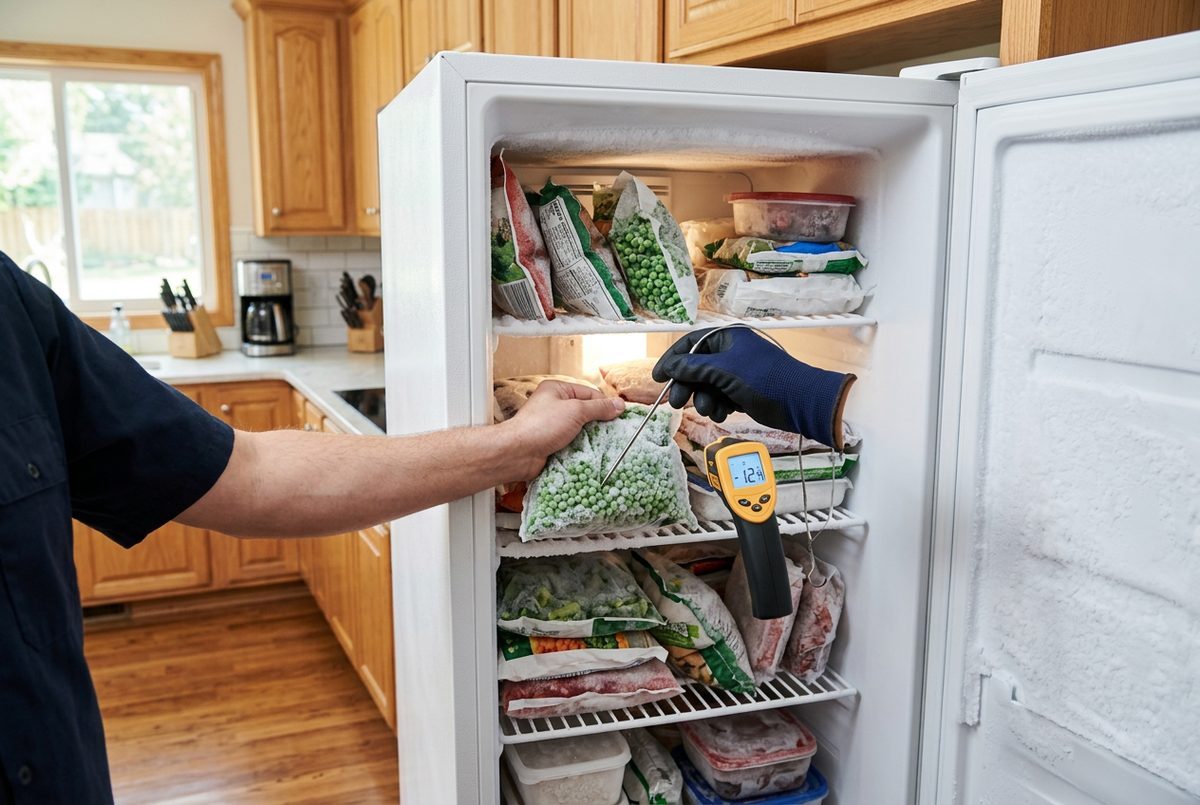
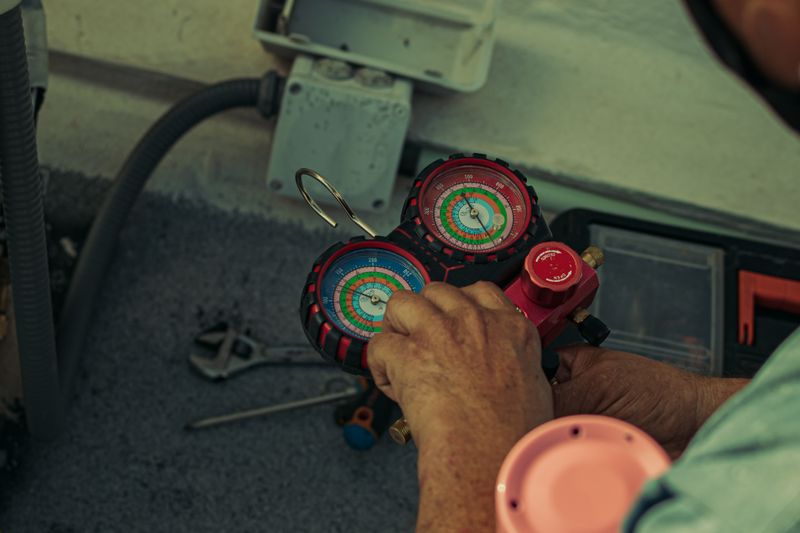
We repair freezers of every kind across the eleven Western and Mountain states we cover, so call us and we will get you scheduled. Freezers fail quietly. You notice frost on the ice cream or a puddle near the baseboard, and by then the food has already gone soft. Most trouble traces back to a handful of parts: the defrost heater or timer, a clogged drain line, a bad evaporator fan, a door gasket that stopped sealing, or a sealed system losing refrigerant. Some units just run nonstop because the coils are packed with dust and pet hair. When we come out, we check the actual temperature, listen to the compressor, pull the back panel, and test the defrost circuit. Then we tell you what we found in plain words before anything gets replaced. Chest freezer, upright, or the freezer half of a side-by-side, it is all the same visit to us.
Call (800) 712-6387- A real person answers
- Open 7 days
- Written quote before work starts
Taking calls until 5:00 PM MT
The freezer symptoms we hear most
- There's a sheet of ice on the freezer floor Blocked defrost drain, or a door gasket letting humid air in
- Everything tastes freezer-burned lately Failed defrost cycle causing frost buildup and temperature swings
- It runs all day and never shuts off Dirty condenser coils, weak fan, or a thermostat stuck closed
- Ice cream is soft but the light still works Sealed system refrigerant loss, or a stalled compressor
- Loud buzzing or clicking every few minutes Start relay failing, or an evaporator fan blade hitting ice
Safe things to check first
Worth a look before you call — sometimes it saves you the visit.
- 1Set a cup of water inside with a thermometer overnight and see what temperature the freezer actually holds.
- 2Pull the unit forward and look at the coils underneath or behind for a blanket of dust and hair.
- 3Close the door on a dollar bill in a few spots. If it slides out easily, the gasket is worn.
- 4Make sure the vents inside are not blocked by stacked boxes or bags pressed against the back wall.
What homeowners get from an independent shop
| Atlas Appliance Service | Big-box repair chains | Handyman listings | |
|---|---|---|---|
| You approve a written quote first | ✓ | ✕ | ✕ |
| Phones answered by people, every day | ✓ | ✕ | ✓ |
| Gas and electric, all major brands | ✓ | ✓ | ✕ |
| Independent shop, nobody's quota | ✓ | ✕ | ✓ |
| Techs who know the local housing | ✓ | ✕ | ✓ |
What homeowners say after the visit
“Ice maker leak had warped the floor before we noticed. They fixed the valve and pointed us to a floor guy. Above and beyond.”
Kurt V.Peoria, AZ“The person on the phone asked for the model plate ahead of time so the visit came stocked.”
Lena R.Eugene, OR“Dryer squealed like a train. New rollers, quiet laundry room, happy family.”
Gus P.Tempe Junction, AZFreezer Repair — quick answers
How cold should my freezer be?
Zero degrees Fahrenheit is the target for long-term food storage. A few degrees warmer will still freeze food, but it shortens how long that food keeps. If your thermometer reads above ten degrees for hours at a time, something needs attention.
Is a repair worth it, or should I replace the freezer?
It depends on the age of the unit and which part failed. A gasket, fan, or defrost heater is usually straightforward. A sealed system problem on a very old freezer is a bigger conversation. We tell you what we find and let you decide.
My chest freezer stopped after a power flicker. What now?
Check the outlet with a lamp and look for a tripped breaker or GFCI. Some compressors also need time before they restart. If it stays quiet after an hour with power confirmed, the start relay or overload is a common culprit.
Can you work on garage freezers?
Yes. Garage units struggle in Western summers and mountain winters because many are not rated for wide ambient swings. Heat makes the compressor run constantly, and deep cold can stop the thermostat from calling for cooling at all. We check for both.
Why does frost keep coming back after I defrost it manually?
Manual defrosting clears the symptom, not the cause. Frost returns when the automatic defrost circuit is dead, the drain is plugged, or warm room air leaks past a tired door seal. Those are the three we test first.
Should I keep the door shut while waiting for service?
Yes, and keep it packed. A full freezer holds cold much longer than an empty one. Move anything already thawed to a cooler with ice. If you expect a long wait, call us and we will talk through what to save.
How it works
- Step 1
Tell us the symptom
Call us or fill out the form and describe what you hear, smell, or see. A noise, a leak, an error code, the smell of something burning. Small details help us load the right parts on the van before we head out.
- Step 2
We come look
A technician comes to your home and tests the machine instead of guessing at it. You'll hear what failed, what the fix takes, and what we'd do if this were our own kitchen.
- Step 3
Repair and check
A lot of parts ride with us, so common failures get handled on the same visit. Harder parts we order in. Then we run the appliance through a cycle and make sure the problem is actually gone.
- A real person answers
- Open 7 days
- Written quote before work starts
Why homeowners call us
- Western conditions, plainlyHard well water scales up dishwasher jets and water heater lines. Summer heat leans on refrigerator compressors. Cold garages freeze washer valves in winter. We see those patterns weekly, so we check for them before chasing something exotic.
- Brand independentWe aren't tied to any manufacturer. That means we work on the mixed lineup most homes actually have: one brand of range, another brand of laundry, a fridge somebody bought used. Same technician, same visit.
- Steady, not rushedRushing is how a diagnosis goes wrong. We take the time to pull the panel, test the part, and read the board. And if a repair doesn't make sense for the age of the machine, we'll say so out loud.
- Straight schedulingYou get a real appointment window and a heads-up when the technician is on the way. Rural addresses and long mountain driveways are normal for us. Tell us about the gate or the gravel and we'll plan for it.
- All major brands, gas & electricIndependent service on Whirlpool, LG, Samsung, GE, Maytag, Bosch, KitchenAid and the rest.
- Straight answersSome machines aren't worth the part, and we say so before you spend anything.
Freezer Repair
Small faults become big ones on a schedule of their own
Describe the symptoms and we'll book the visit — takes about a minute.
- A real person answers
- Open 7 days
- Written quotes
- All major brands
- Gas & electric
Rather not call? Get a free quote →